
Your needs, this model
Does it fit your priorities?
Can SKU 022-0336 charge a 12 V AGM car battery?
The exact P/N manual documents 12 V lead-acid charging and includes vehicle-battery connection procedures; the product page specifically lists AGM compatibility. Its toy-focused box list does not name conventional automotive clamps or a ring-terminal lead, so confirm that the exact retail package has a safe vehicle-compatible connection and that the battery maker permits 3.5 A.
Explore this need in the finder →Does 022-0336 offer separate 6 V and 12 V charging at the same time?
No. The exact instruction manual describes a selector for one 6 V or 12 V lead-acid battery. Choose the voltage that matches the battery before connecting it; the manual says the setting cannot be changed while AC and the battery are connected.
Explore this need in the finder →Can I leave the 022-0336 connected to maintain a charged 12 V battery?
The manual describes an automatic float/storage stage and long-term AC connection after charging. It also says not to expose the unit to rain or snow and not to charge a frozen battery. Confirm the exact lead set, battery condition and battery-maker maintenance instructions before leaving it connected.
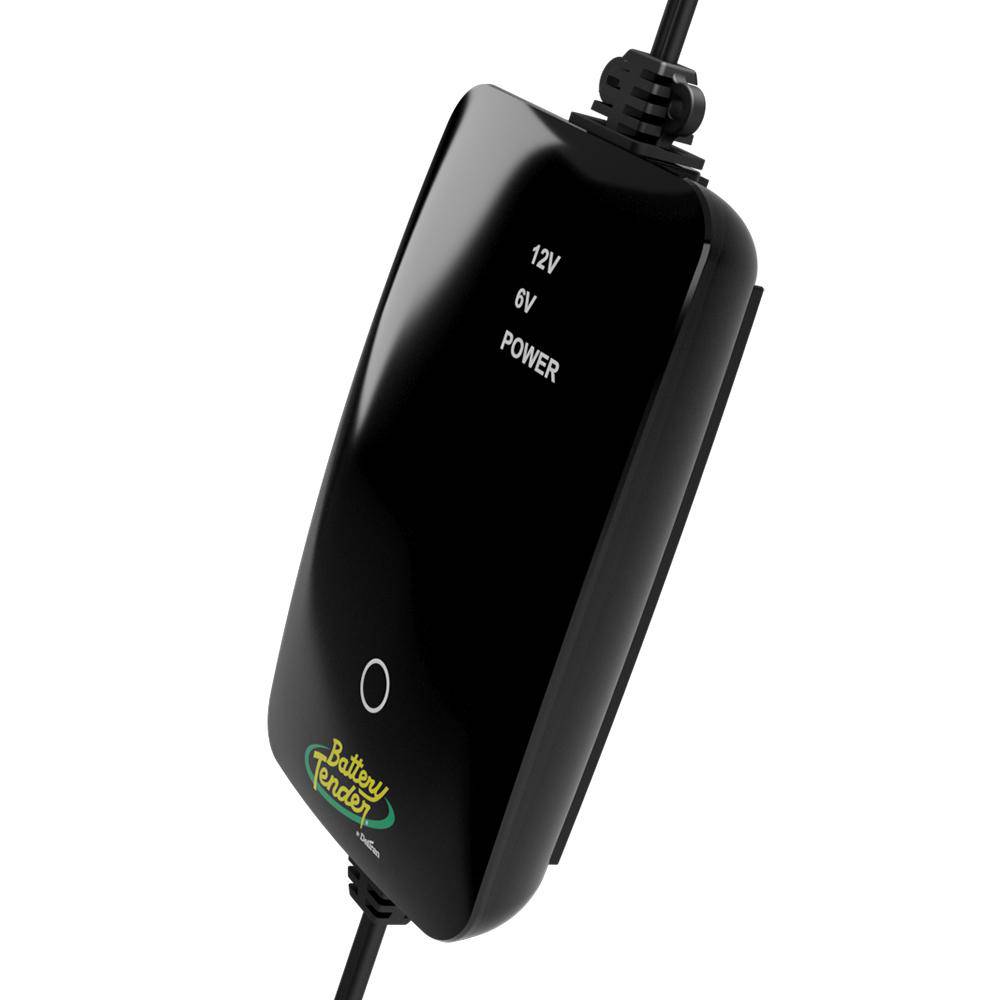
Explore this need in the finder →The Battery Tender 3.5 A Ride-On Toy charger (SKU 022-0336-ROT; manual P/N 022-0336) is an unusual candidate for a car-battery shortlist. Its current product page is aimed at children's ride-on toys, but the exact P/N manual also specifies selectable 6 V and 12 V lead-acid modes and gives instructions for charging an installed vehicle battery. That makes its car-battery use a source-supported possibility, not a claim that the page's toy-adapter package is automatically ready for every car. This is a research-based assessment, not a hands-on test.
Why it appears in this car-charger library
The exact SKU page describes a 3.5 A automatic charger and maintainer for ride-on toys. Its included-box list names 12 V Peg Perego and Power Wheels adapters plus a 6/12 V Action Wheels and Motiontrendz adapter. Separately, the linked manual identifies P/N 022-0336, says it is designed for three-cell and six-cell lead-acid batteries, explains switching between 6 V and 12 V, and gives safety steps for a battery installed in a vehicle. Those model-specific vehicle instructions are the reason this product is included here. They do not establish that the toy adapters listed on the page are interchangeable with ordinary automotive clamps or ring terminals.
One output serves one battery at a time. The manual describes automatic qualification, bulk, absorption and float/storage stages, then permits long connection periods while connected to AC. That is a useful charge-and-maintain pattern, but it is not a jump-start function or a multi-bank charger. The page does not provide a confirmed amp-hour compatibility range, so the review does not treat its 3.5 A rating as proof that every battery size is appropriate.
Choose the voltage before connecting
This is a selectable 6 V or 12 V charger, not two simultaneous outputs. The manual says to use the car owner's manual to identify battery voltage and to set the charger's selector to match. Once AC is applied and the battery is connected, the selector cannot be changed without disconnecting the battery. That matters especially for classic vehicles: their model year does not prove that the current electrical system is still 6 V, and conversions are possible. Read the battery and vehicle documentation rather than guessing.
The manual describes lead-acid charging only. Battery Tender's exact page lists AGM and lead-acid compatibility; neither source documents a LiFePO₄ mode. Do not transfer lithium support from a differently named Power Tender model. The manual also says the charger will not start when it cannot detect at least 3 V at its output. A deeply discharged or damaged battery below that threshold is not a problem to solve by repeatedly reconnecting this unit.
Output and capacity need a conservative reading
The manual states a 3.5 A charging rate and gives an example: a fully discharged 15 Ah battery would take about 3.5 hours to reach 80% under the stated conditions. That is an example, not a guaranteed charge time or a maximum-capacity limit. The exact page and manual do not establish an Ah range for SKU 022-0336; this assessment therefore leaves the capacity boundary unknown, and the finder does not use this charger as a documented fit when a specific Ah capacity is required. Follow the battery maker's allowed rate and obtain model-specific guidance if size is a deciding requirement.
Check the lead set and conditions before buying
The page's package list emphasizes toy-specific adapters and does not list a conventional automotive clamp lead or ring-terminal harness. The manual's vehicle procedures discuss clamps and ring terminals, but that does not settle what a particular current retail package contains. Confirm the exact SKU, the charger-side connector and the vehicle-compatible output lead before purchase; do not improvise a connection or assume that an image shows the box contents.
The manual says not to expose the charger to rain or snow, never to charge a frozen battery, to ventilate the charging area, and to keep leads clear of moving engine parts. No outdoor rating or operating-temperature range is established for this SKU. Its product page's warranty field and FAQ disagree, so this review does not state a warranty duration; check the current written terms for the exact package.
How it compares with the nearby 3 A Power Tender
The previously reviewed Power Tender 3 A (022-0202) is a portable 6/12 V charger with separate documented lead-acid and 12 V LiFePO₄ profiles, while the 022-0336 manual is lead-acid only and rates output at 3.5 A. The extra half amp does not by itself establish a faster result for a specific battery, and the toy adapter set is a practical package difference. Buyers who need a 12 V lithium profile, a published capacity boundary, or confirmed automotive terminals should compare the exact instructions and included leads rather than choosing by family name or current alone.
Who should consider the 022-0336
Consider it only if one portable output, 6 V or 12 V lead-acid charging, the 3.5 A rate and the exact lead arrangement fit the battery and vehicle instructions. Its documented toy focus, unknown capacity ceiling and unconfirmed automotive lead package are real checks, not details to infer from its voltage selector. Before connecting a car battery, verify the model number and the manual revision, confirm a safe vehicle-compatible lead, follow the battery maker's rate and connection directions, and keep the charger dry. No charger timing, ownership or test results are claimed here.
Manufacturer references: the exact 022-0336 product page and its linked P/N 022-0336 instruction manual.
Key specifications
Key details at a glance
| Output battery voltages | 6 / 12 V |
|---|---|
| Supported chemistries | Lead-acid |
| Rated DC charging current | 3.5 A |
| Independent battery outputs | 1 |
| Arrangement | Portable plug-in charger |
| Included connection | The exact SKU page lists 12 V Peg Perego and Power Wheels adapters plus a 6/12 V Action Wheels/Motiontrendz adapter. It does not list a conventional automotive clamp lead or ring-terminal harness; verify the exact package and vehicle-side lead before use. |
Use the exact model’s instructions for operating limits, supplied equipment and version differences.
Sources for this review
Sources for this assessment
Keep the next step evidence-led
Use the finder to combine voltage, battery chemistry, charging job and setup requirements; then check the exact model and its manual.