
Your needs, this model
Does it fit your priorities?
Can the earlier 022-0185G maintain a 12 V AGM battery in dry storage?
The exact page lists AGM support, one 1.25 A output and a 14–80 Ah range. Its manual describes automatic float maintenance after a full charge. Include earlier models to see this record, keep the charger dry because the manual says no rain or snow, and follow the battery maker's storage instructions.
Explore this need in the finder →Does the IP65 claim make 022-0185G suitable to leave in rain?
No exposed-use recommendation is supported here. The product page advertises IP65/weather protection, but the exact 022-0185G manual says not to expose it to rain or snow. Ask the manufacturer for a reconciled current instruction before installing it where moisture can reach the unit.
Explore this need in the finder →Can the 022-0185G recharge an 81 Ah 12 V battery?
The exact product page gives an upper charging range of 80 Ah, so 81 Ah is above the listed limit. Its 1.25 A output is also modest for recovery charging; compare a model with a documented larger range and verify the battery maker's allowed rate.
Explore this need in the finder →Bottom line: SKU 022-0185G is a 12 V, 1.25 A single-output Plus for lead-acid batteries, with a mountable case and an IP65 rating stated on the product page. The more important caveat is that its exact manual says not to expose the charger to rain or snow. The manufacturer’s page promotes weather resistance and permanent mounting, but those instructions are not reconciled. I would not treat the page rating alone as approval for an exposed installation.
What separates the 0185G from the familiar Plus
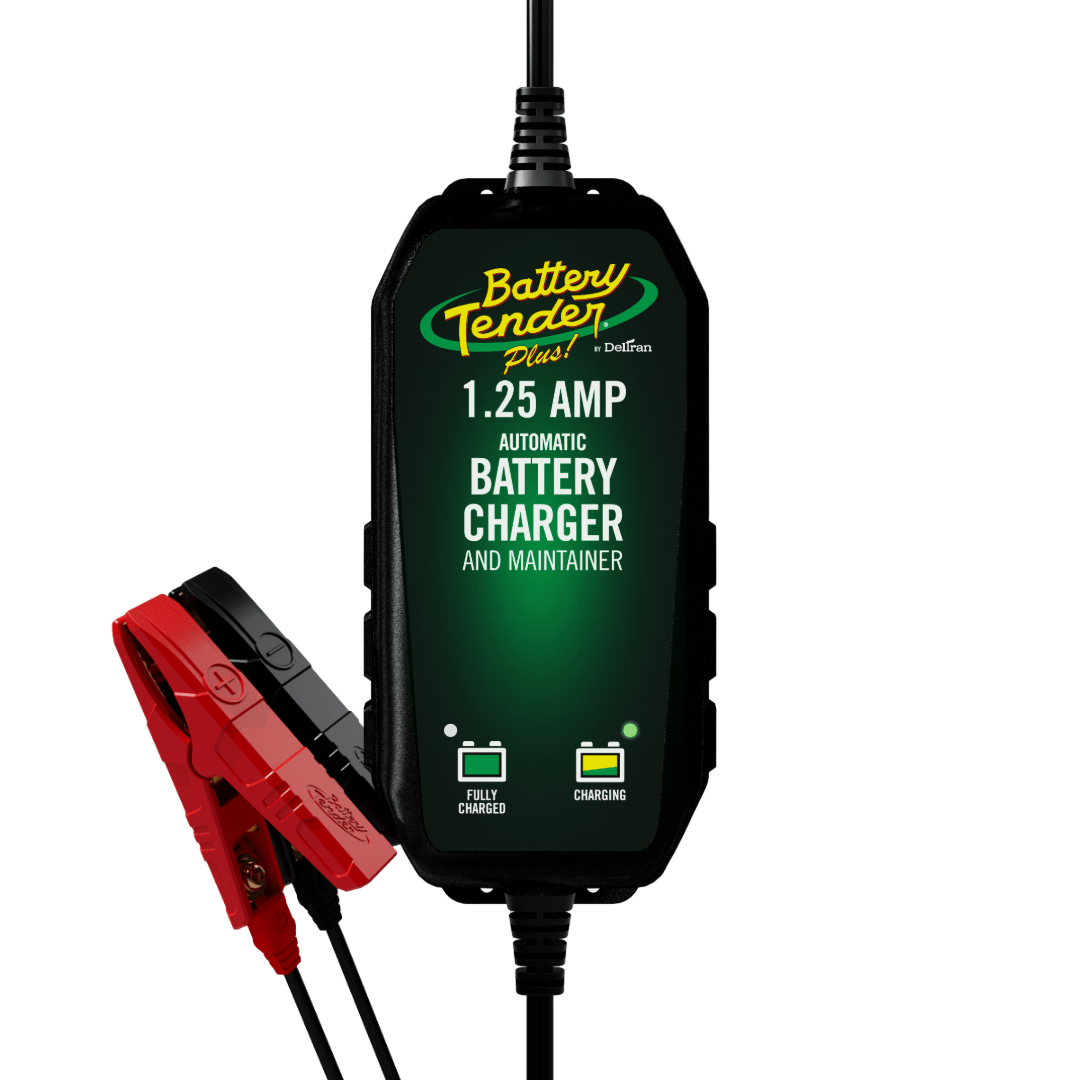
This is not simply another finish of the reviewed 021-0128 Plus. Battery Tender lists the 0185G as a 12 V 1.25 A lead-acid charger with a 14–80 Ah range, IP65 protection and a mounting design. Its exact manual identifies P/N 022-0185G and specifies a six-cell lead-acid charger. The product page lists flooded, AGM, gel and sealed maintenance-free batteries. It offers one output, so its 1.25 A rating is for one battery connection, not a multi-bank total.
The maker’s product-transition notice says the 0185G is being replaced by the Plus 6 V/12 V 2 A, SKU 022-0200, and names a seven-year warranty for that replacement compared with five years for the 0185G. That is a manufacturer-stated model relationship, not a guarantee that any seller has the earlier unit or the replacement in stock. The 022-0200 is a different configuration and should be checked by its own label, instructions and package details.
The IP65 rating and manual need to be read together
The attraction of the 0185G is obvious on paper: it can be mounted near the equipment, and the product page calls it IP65/weather resistant. Yet the manual’s safety instructions say, plainly, not to expose the charger to rain or snow. That creates a material gap between page-level marketing and operating directions. A mountable design is not proof that the unit is safe in an engine bay, boat compartment, outdoor shed or any location where moisture, heat, vibration or battery gases could reach it.
For this reason, the fact record stores the product-page IP65 statement separately from the reconciled operating rating and does not use it to claim wet-use suitability. The manual also instructs users to keep the charger ventilated, away from the battery, and not directly above it; it says a marine battery must be removed and charged ashore unless the equipment is specifically designed for onboard marine charging. If permanent mounting or exposure is the reason you are considering this model, ask Battery Tender for current written instructions tied to 022-0185G before treating it as an installed solution.
Charging and maintenance fit
The 1.25 A output is a modest rate for recovery charging. The page’s 14–80 Ah range places an 80 Ah battery at the published upper limit; confirm that the exact battery maker permits the charger’s rate and allow time rather than expecting a quick recovery. When the battery is already charged and the job is storage maintenance, the manual describes an automatic float/storage stage. That use still depends on a healthy battery, the correct connections and the manufacturer’s supervision and storage instructions.
The exact manual supports lead-acid only, so the 0185G is not a lithium-profile charger. A built-in ring-terminal lead can make a frequently used connection more convenient, while the supplied clip lead can serve a temporary connection; the current product page lists both. The artwork shows the Plus charger and clamps, but a photo is not a package manifest. Verify that the offer contains the ring-terminal harness, clamps, correct AC lead and instructions you need.
How it compares and who should pass
Compared with the 021-0128 Plus, the 0185G adds a stated mountable/IP65 design but carries a shorter five-year warranty rather than the 021-0128 page’s ten-year warranty. Compared with the newer 022-0200 successor named by the manufacturer, it has lower rated current and fixed 12 V output rather than selectable 6/12 V. Those distinctions matter more than the shared “Plus” label. If your battery is a 6 V system, requires lithium charging, needs two independent outputs or needs at least 2 A, this model does not satisfy that requirement.
The finder marks it as an earlier model, so it appears only when earlier models are included. Its evidence-backed role is a dry-location, one-battery lead-acid maintainer where 12 V, 1.25 A and the listed size range fit. It is not a recommendation for leaving a charger exposed to rain, and no conclusion about current availability is made. This assessment is based on the exact manufacturer product page and linked manual; the unit was not physically tested or used.
Key specifications
Key details at a glance
| Output battery voltages | 12 V |
|---|---|
| Supported chemistries | Lead-acid |
| Rated DC charging current | 1.25 A |
| Published charge capacity limit | 80 Ah |
| Independent battery outputs | 1 |
| Arrangement | Portable plug-in charger |
| Included connection | Exact product page lists alligator-clip and ring-terminal quick-disconnect leads; verify the exact package and connectors. |
Use the exact model’s instructions for operating limits, supplied equipment and version differences.
Sources for this review
Sources for this assessment
Keep the next step evidence-led
Use the finder to combine voltage, battery chemistry, charging job and setup requirements; then check the exact model and its manual.