
Your needs, this model
Does it fit your priorities?
Which battery chemistries does the exact 022-0199 documentation support?
The manual identifies P/N 022-0199 and documents a selectable profile for six-cell lead-acid/AGM and four-cell LiFePO4 batteries. It does not establish the LiFePO4 BMS condition, so confirm the battery's protection and charging requirements before use.
Explore this need in the finder →Can this model recharge a 20 Ah 12 V AGM battery?
The exact product page lists a 3–30 Ah range and a lead-acid/AGM profile, so 20 Ah falls within that page-stated capacity range. However, the current page states 1 A while the SKU-matched manual states 800 mA; verify the exact current rating and the battery maker's permitted rate before relying on a charging-time estimate.
Explore this need in the finder →Does the 022-0199 document at least 1 A of output?
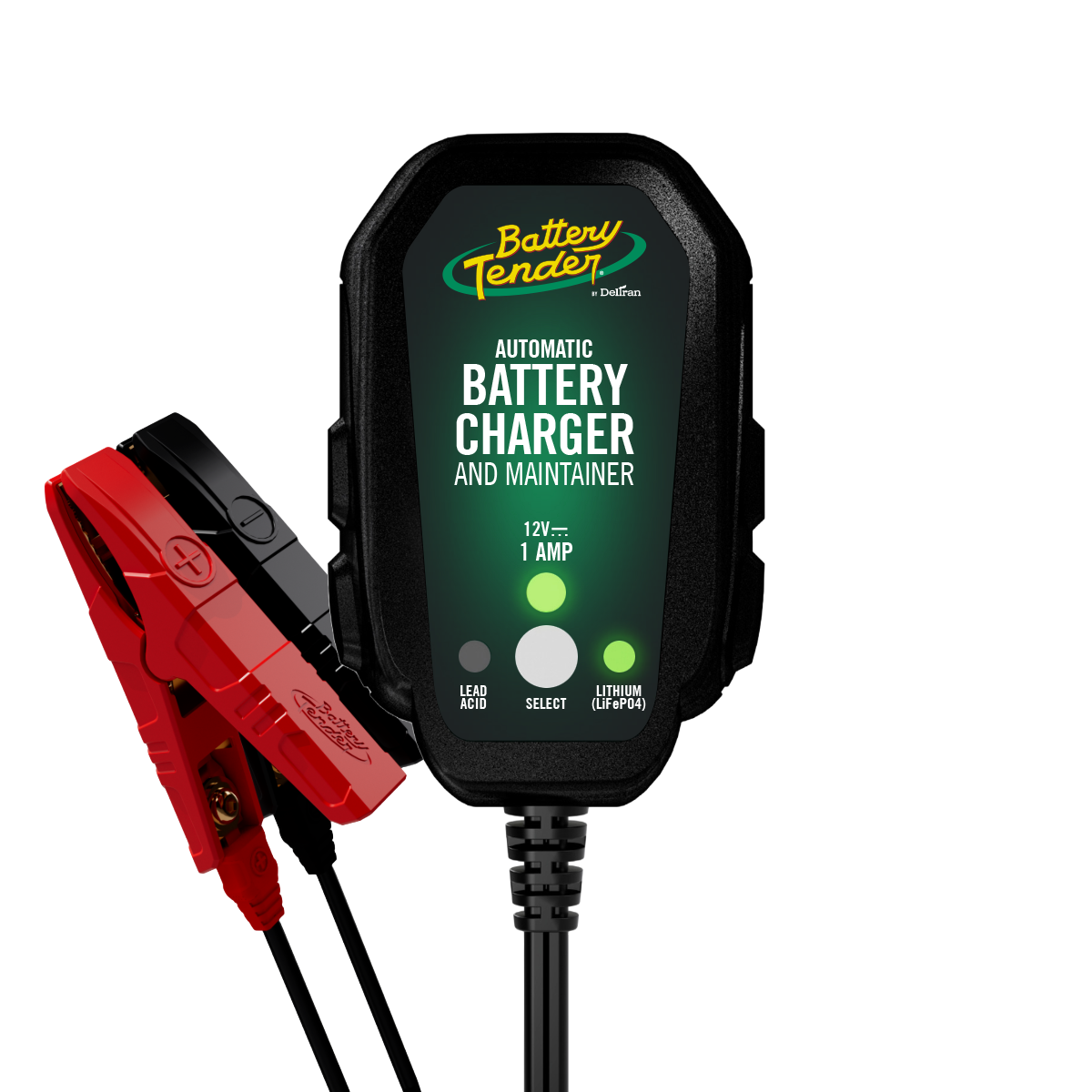
Not consistently. The current product page and lead artwork say 1 A, but the exact-P/N manual says 800 mA and the same page includes older 800 mA artwork. The documented output rating remains unresolved, so this assessment does not count it toward a 1 A minimum; verify the unit label and current manual with the maker or seller.
Explore this need in the finder →Bottom line: the 022-0199 is a single-output 12 V Junior with selectable lead-acid and LiFePO4 profiles, but the exact output rating is not consistently represented in Battery Tender’s own material. The current product page and lead image say 1 A; its linked manual identifies P/N 022-0199 and gives 800 mA, while another official image on the same page also says 800 mA. Because the same SKU is attached to both ratings, this assessment does not choose one as the definitive hardware specification or count the model toward a minimum-current filter.
What the exact model does document
The manual identifies the charger as P/N 022-0199 and supports 12 V, six-cell lead-acid/AGM batteries and four-cell LiFePO4 batteries. A selector chooses the chemistry profile; this is one charger with two alternative settings, not a claim that one battery can be charged in both modes. The product page lists flooded, AGM, gel and sealed maintenance-free lead-acid types alongside LiFePO4, and describes automatic charge and float maintenance. Its stated compatible size range is 3–30 Ah.
That range is important for a car-battery shopper. If the battery label is above 30 Ah, the manufacturer’s stated charging range does not cover that recharge request. The page also says the Junior can maintain a larger battery once it is already full, but that is a different task from bringing a depleted battery back up. I would not use the maintenance claim to erase the 30 Ah charging limit or convert it into approval to recover-charge a larger battery.
The output conflict changes the buying decision
Current matters when comparing compact chargers: a one-amp rating is still a low-current choice, and a rating of 800 mA is lower again. More importantly, a purchaser cannot use the finder’s minimum-current requirement to screen this exact model accurately while its own page, image and manual disagree. The fact record therefore leaves the numerical current unknown. If you need a confirmed 1 A or higher, choose a product whose exact page and manual agree or first get a written clarification tied to the full SKU. Do not assume the newer-looking hero art represents a hardware revision; the evidence reviewed does not identify two separate SKUs or establish when any rating changed.
For comparison, the standard Junior 021-0123 is a separate lead-acid model rated at 750 mA in its reviewed evidence; it does not provide the Multi-Chemistry model’s lithium profile. The 022-0199 is potentially more flexible for a small 12 V battery because it offers a chemistry selector, but that difference does not settle its output. A shopper who needs faster recovery, a larger documented charging range or a multi-bank layout should compare the exact reviewed options rather than treating the product family name as a performance tier.
Battery fit and unresolved lithium details
For a 12 V battery between 3 and 30 Ah, the page-stated range and listed modes provide a useful starting point. Match the label on the battery to the correct selector position before connecting, then use the vehicle and battery-maker instructions to confirm the charging mode and allowed rate. The manual says the unit will not begin output below a 3 V battery-sense threshold; a severely depleted or damaged battery is not established as recoverable just because the charger has an automatic cycle. Its manual also describes charging and storage/float stages, but does not state a lithium BMS requirement. A LiFePO4 battery owner should confirm whether the battery’s own protection is appropriate instead of reading “lithium compatible” as a complete safety assessment.
The included set is described on the product page as a two-in-one alligator-clip and ring-terminal lead. The listed image shows the charger, selector and clamp connection; it does not verify the contents of a particular seller’s package. Check for the exact 022-0199-DL-WH SKU, the correct connector lead and the current manual revision before ordering.
Setup cautions and who should pass
This is a 120 V AC charger for a dry, ventilated setup, not a device-power supply or an onboard charger. The manual says not to expose it to rain or snow, never to charge a frozen battery, and to observe battery-polarity, ventilation and connection precautions. Keep the case away from battery gases and acid, and route the leads clear of moving parts. A product-page photograph or an outdoor vehicle example does not override the manual’s environmental instruction.
The 022-0199 is best treated as a small-battery, one-connection candidate for someone who needs a 12 V lead-acid or LiFePO4 mode and is willing to verify the current rating before relying on it. It is a poor choice when a confirmed minimum amperage, a capacity above 30 Ah, wet-location use, or a documented lithium BMS condition is essential. This is a desk-based assessment from the manufacturer’s current page, its exact-SKU manual and official image set; no hands-on testing or ownership is claimed.
Key specifications
Key details at a glance
| Output battery voltages | 12 V |
|---|---|
| Supported chemistries | Lead-acid / Lithium-ion |
| Published charge capacity limit | 30 Ah |
| Independent battery outputs | 1 |
| Arrangement | Portable plug-in charger |
| Included connection | Exact product page lists a two-in-one alligator-clip and ring-terminal lead; check that the seller's exact package matches. |
Use the exact model’s instructions for operating limits, supplied equipment and version differences.
Sources for this review
Sources for this assessment
Keep the next step evidence-led
Use the finder to combine voltage, battery chemistry, charging job and setup requirements; then check the exact model and its manual.