
Your needs, this model
Does it fit your priorities?
Can the 022-0165 connect two batteries at once?
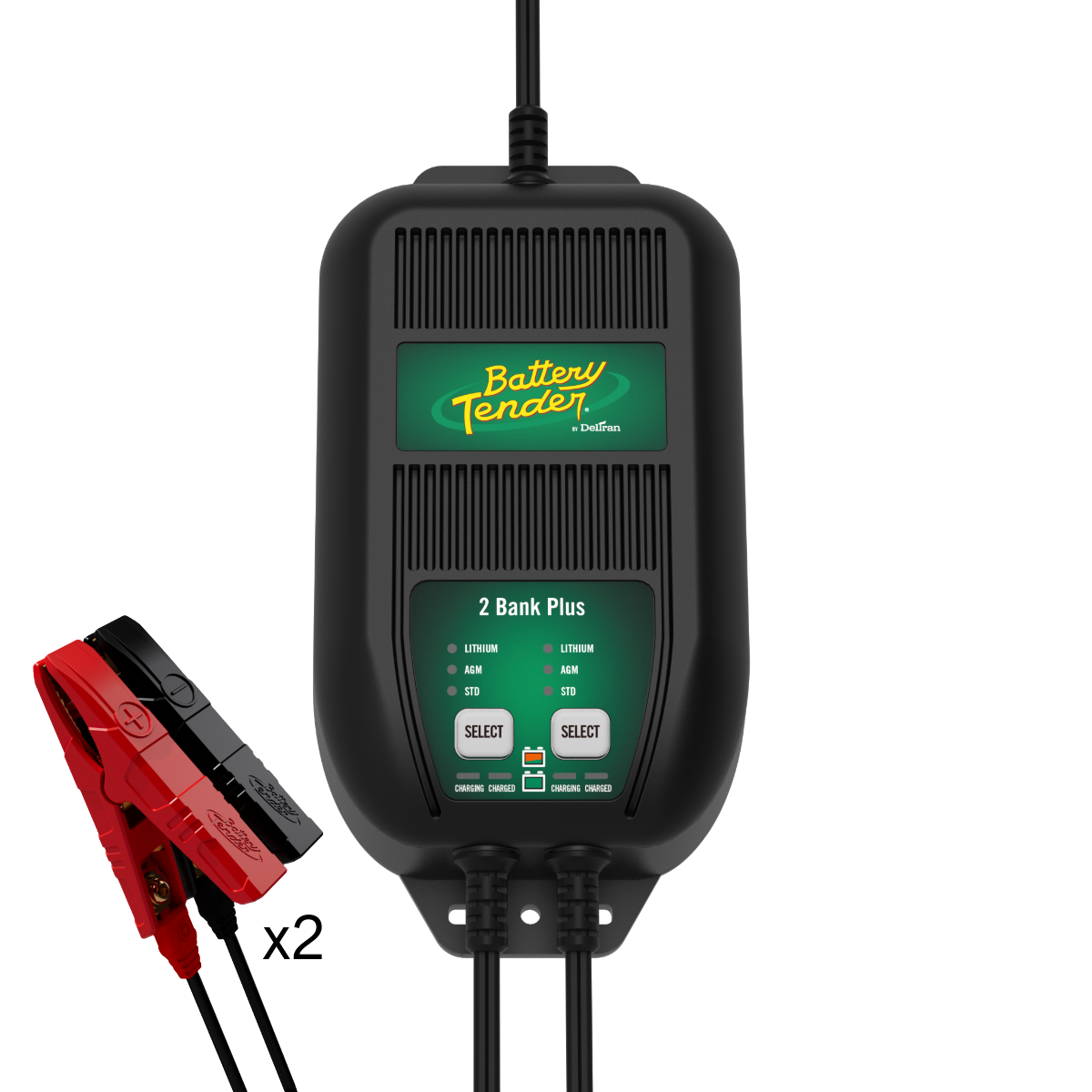
Yes. The exact product page and 392-0453-R0 manual describe two independent charging channels, each rated up to 1.25 A. It is not a splitter that divides one 1.25 A output; do not add the two channel ratings and assume one battery receives 2.5 A.
Explore this need in the finder →Does each 022-0165 bank supply at least 2 A?
No. The exact product page states 1.25 A per independent bank, below a 2 A minimum-current request. Consider a different reviewed output rating and check that the battery maker approves its charge rate.
Explore this need in the finder →Does the 022-0165 document a 12 V LiFePO4 mode?
The shared manual expressly includes 12 V four-cell LiFePO4, but neither that manual nor the exact product page establishes the required built-in BMS condition. The open-BMS finder answer can include the model; an explicit required/not-required BMS choice cannot be inferred from missing information.
Explore this need in the finder →Bottom line: the 022-0165 is a two-output 12 V charger with a useful distinction from a splitter: each bank is documented as independent and rated at 1.25 A. It can charge or maintain two compatible batteries at the same time from one 120 V AC supply, with a separate status/chemistry control for each channel. Its limits are equally important: the output is modest, the exact page’s lower battery-size statements conflict, and the manual says not to expose the unit to rain or snow even though the page advertises IP65.
Two channels, not one shared 2.5 A output
The product page identifies SKU 022-0165-DL-WH and describes two separate charging circuits. The shared 392-0453-R0 manual names P/N 022-0165 and 022-0148 and says its ports operate independently. On this 2-bank model, each channel can run its own charge and float-maintenance cycle. A depleted battery on one side does not make the other channel become a single combined 2.5 A output; the stated rating is 1.25 A per bank.
That arrangement makes sense if two stored vehicles each need their own connection but a separate charger for each is inconvenient. It is less compelling if you have only one battery or need a faster recovery rate. For one 12 V battery, a smaller single-output charger may be easier to manage. For several vehicles, compare the number of independent outputs and per-bank current rather than adding the printed output numbers together.
Voltage, chemistry and battery-size checks
The exact manual documents 12 V six-cell AGM or standard lead-acid batteries and 12 V four-cell LiFePO4. The page also lists the usual lead-acid families and lithium. The chemistry is selected before charging; choose the mode that matches each battery and consult its own instructions. The reviewed documents do not establish whether a LiFePO4 battery must have a built-in BMS or whether a model without one is acceptable, so an explicit BMS requirement cannot be met from this evidence alone.
Battery Tender’s page lists 14–80 Ah per bank, but its FAQ also says different-sized batteries such as 10 Ah and 60 Ah can be connected concurrently. The manual gives a charge-time example for a 15 Ah battery and no general capacity range. The shared 80 Ah upper value appears on the page and in its FAQ, so it is used as the documented ceiling; the lower size boundary remains unresolved. Check the battery’s actual label, the charger’s current instructions and its permitted charging rate, especially for small batteries. Do not turn one example into a universal charge-time promise.
Installation and environmental limits
The page describes a wall-mountable case, a 6.1-foot AC lead, two output leads and an approximate 12-foot reach. It is an external AC charger, not a battery-mounted onboard marine unit. The page claims IP65, but the exact manual warns against rain and snow exposure. This assessment therefore treats wall mounting as an indoor organization option only; the IP claim does not override the written operating warning. The manual also calls for ventilation, keeping the charger away from battery acid and gas, not placing it directly above a battery, and not charging a frozen battery.
Use the two-bank layout only when both batteries and their wiring can be arranged safely. The included package is listed as two sets of alligator clips and ring-terminal cables, but verify the exact seller’s bundle rather than assuming every pictured lead is included. Keep each channel’s polarity and chemistry selection separate, and follow the vehicle and battery makers’ connection procedures. The manual notes that a battery below its minimum sense voltage may not start a charge cycle; a deeply discharged or faulty battery may need diagnosis rather than another automatic charger attempt.
Where it fits against alternatives
Compared with a single-output Plus or Junior, the 022-0165 trades a larger wall-mountable enclosure and two separate connections for the convenience of servicing two batteries from one AC plug. It remains a low-current charger at 1.25 A per battery. A reviewed five-bank Power Tender is a different shop format: it has more independent channels and higher rated current per channel, but also a larger wall-mounted footprint and its own 6/12 V chemistry restrictions. For a single battery that needs at least 2 A, the two-bank count does not compensate for this model’s 1.25 A output.
The 022-0165 is a practical match only when two independent 12 V connections matter more than fast recovery, the batteries fit the exact instructions, and the unit can stay in a dry, ventilated location. It is not a substitute for a wet-rated onboard charger, and the BMS and lower Ah range are not fully settled by the reviewed evidence. This is a source-based assessment of the manufacturer page, linked manual and exact model image, not a hands-on test.
Key specifications
Key details at a glance
| Output battery voltages | 12 V |
|---|---|
| Supported chemistries | Lead-acid / Lithium-ion |
| Rated DC charging current | 1.25 A |
| Published charge capacity limit | 80 Ah |
| Independent battery outputs | 2 |
| Arrangement | Portable plug-in charger |
| Included connection | Exact product page lists two sets of combined alligator-clip/ring-terminal quick-disconnect leads and an instruction manual; confirm seller package. |
Use the exact model’s instructions for operating limits, supplied equipment and version differences.
Sources for this review
Sources for this assessment
Keep the next step evidence-led
Use the finder to combine voltage, battery chemistry, charging job and setup requirements; then check the exact model and its manual.